How Is AI Automation Different From Traditional Workflow Automation?
Traditional workflow automation follows predefined rules and works best with structured data.
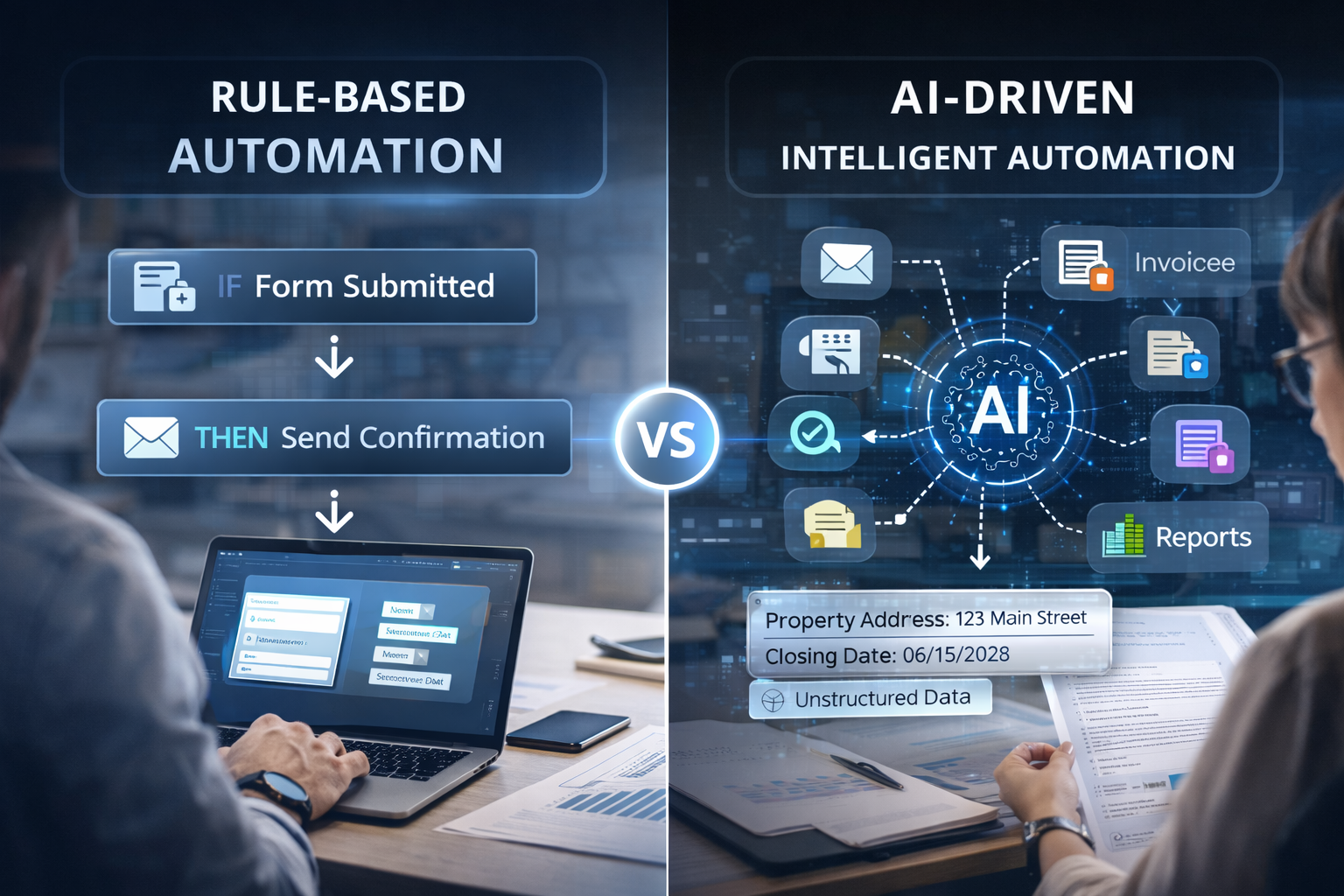
Traditional workflow automation has been part of enterprise software for decades. Systems like CRMs, ERP platforms, and marketing automation tools allow organizations to create rule-based workflows that move data through predefined steps.
These workflows operate on a simple principle:
If a condition is met, perform an action.
For example:
- If a form is submitted, send a confirmation email.
- If a customer status changes, create a task.
- If an invoice is approved, generate a payment.
These systems are extremely useful, but they depend on structured inputs.
The moment information arrives in an unstructured format, traditional automation begins to break down.
Emails, contracts, scanned documents, and free-form text require interpretation. Rule-based systems struggle because the data is not already organized into predictable fields.
This is where AI automation becomes fundamentally different.
AI automation introduces the ability to understand information before acting on it.
Rather than requiring structured input fields, AI systems can interpret:
- Email conversations
- Document contents
- Contract language
- Attachments
- Mixed document packages
For example, consider a title company receiving a real estate purchase contract.
A traditional workflow system cannot easily determine:
- Who the buyer is
- What the property address is
- When the closing date occurs
- Which lender is involved
An AI-enabled workflow can analyze the contract, extract those details, and populate the appropriate fields in the company’s title production system.
This ability to interpret information dramatically expands what automation can accomplish.
In essence:
Traditional automation moves data.
AI automation understands data first, then moves it.
That shift allows organizations to automate processes that previously required human review.
Reading is useful. A workflow assessment makes it concrete.
If a guide sounds like your business, ClearGuide can help you map the workflow and decide what is worth building first.